Heading

Preview text


Keystone Linings & Key Industries have been operating for more than 50 years. How has the company evolved from its early days into the business it is today?

Keystone’s story has always been connected to making, problem-solving and working closely with the building industry.

The business traces its manufacturing legacy back to 1967, when television and stereo cabinets were produced from the first factory in Greenacre, Sydney. Over time, that manufacturing knowledge grew into more specialised CNC machining and decorative panel production and further into specialised commercial acoustic lining systems. 

Today, Keystone Linings remains 100% Australian family-owned and operated, supplying and helping to provide solutions utilising solid, perforated and slotted wall and ceiling panels for commercial interiors, façades and acoustic applications.

The business has grown, but the core approach has stayed practical: understand the design intent, understand the performance requirements, and help turn those requirements into a buildable lining solution. Keystone’s role is often behind the scenes, but the work contributes to schools, offices, civic spaces, hospitality venues and award-recognised projects across Australia.

You often talk about bringing architects’ imaginations to life. What does that philosophy mean in practice?

When we say we help bring architects’ ideas to life, we mean it in a very practical sense. Keystone has worked on many projects where the architectural vision was unique, ambitious and technically challenging. In those situations, our role is to help bridge the gap between the concept and the finished built outcome.

For us, carrying an architect’s idea from concept to completion means taking the design intent seriously, then working through the details required to make it achievable on site. Architects may come to us with a particular look, pattern, finish, acoustic requirement, fire-rating requirement, or a detail that needs to work around lighting, services, curves, joints or installation constraints. Our first step is to listen carefully, then help translate that vision into a lining system that can be manufactured, documented, installed and relied on from a performance and compliance perspective.

That may involve advising on the right substrate, perforation pattern, finish, panel size, joint layout, acoustic backing, fixing method or compliance pathway. In many cases, the visible panel is only one part of the full system, so we also help identify any supporting materials required behind the panel to achieve the intended acoustic or fire performance.

We see the best outcomes as a collaboration. The architect leads the design direction, and Keystone contributes manufacturing knowledge, technical experience and practical problem-solving. When those elements come together, the final result stays true to the original vision while also meeting the realities of construction.

You often talk about bringing architects’ imaginations to life. What does that philosophy mean in practice?

When we say we help bring architects’ ideas to life, we mean it in a very practical sense. Keystone has worked on many projects where the architectural vision was unique, ambitious and technically challenging. In those situations, our role is to help bridge the gap between the concept and the finished built outcome.

For us, carrying an architect’s idea from concept to completion means taking the design intent seriously, then working through the details required to make it achievable on site. Architects may come to us with a particular look, pattern, finish, acoustic requirement, fire-rating requirement, or a detail that needs to work around lighting, services, curves, joints or installation constraints. Our first step is to listen carefully, then help translate that vision into a lining system that can be manufactured, documented, installed and relied on from a performance and compliance perspective.

That may involve advising on the right substrate, perforation pattern, finish, panel size, joint layout, acoustic backing, fixing method or compliance pathway. In many cases, the visible panel is only one part of the full system, so we also help identify any supporting materials required behind the panel to achieve the intended acoustic or fire performance.

We see the best outcomes as a collaboration. The architect leads the design direction, and Keystone contributes manufacturing knowledge, technical experience and practical problem-solving. When those elements come together, the final result stays true to the original vision while also meeting the realities of construction.

How has the role of acoustic and architectural linings changed within the built environment over the past decade?

Over the past decade, acoustic and architectural linings have moved from being viewed mainly as surface finishes to being expected to play a much more active role in how a building performs.

Today, linings are expected to support design intent, acoustic comfort, fire compliance, durability, maintenance, installation detailing, sustainability and occupant wellbeing. In schools and education environments, for example, noise performance is a major consideration. Classrooms, halls, libraries, learning commons and breakout spaces all need to manage sound properly so students and teachers can communicate clearly and use the space comfortably.

Fire performance has also become a much more important part of the conversation. Architects and builders are under increasing pressure to ensure wall and ceiling linings meet the correct Group Number, substrate and system requirements for the specific application. Keystone’s own technical guidance notes that wall and ceiling linings are assessed under NCC requirements, including Fire Hazard Properties and Group Numbers.

At the same time, architects are also looking for materials that contribute to warmer, more natural and more considered interiors. This is where biophilic design has become more relevant, particularly through the use of timber, plywood, natural textures and finishes that help spaces feel less clinical and more connected to natural materials. Keystone has written about the role of organic materials and timber in biophilic design, particularly where acoustic linings also need to support comfort and wellbeing.

Sustainability expectations have also grown. Material sourcing, durability, local manufacturing, FSC-certified options where applicable, and clear product information are now part of the specification conversation. For example, Keystone’s Key-Ply product information refers to natural, renewable material, FSC and ethically sourced plywood options, while project examples such as Whyalla Secondary College reference FSC-certified Birch Plywood panels used with a clear finish. We also have the Hoop Pine Plywood Panels specified for use at Chrismont Winery.

This means linings now have to do several jobs at once. They need to contribute to the look and feel of the space, help manage noise, meet strict compliance requirements, support sustainability goals, suit the environment they are installed in, and still be practical to manufacture and install.

That shift has made Keystone’s role more important in the design and construction process. We help architects and builders think through both the visible panel and the supporting system behind it, so the final result can stay true to the design vision while also meeting the performance expectations of today’s built environment.

Can you tell us about the manufacturing side of the business and why local Australian production remains important to Keystone?

Local Australian production is a big part of who Keystone is and how we work, now more than ever.

Keystone’s manufacturing history goes back decades, and that experience has shaped the way we approach architectural linings today. We are not simply importing a product and passing it on. We are involved in the practical making of the system, from material selection and machining through to samples, finishes, perforation patterns, panel set-outs and project-specific details.

That local manufacturing capability is especially important because architectural lining projects are rarely one-size-fits-all. A project may require a particular substrate, finish, perforation pattern, fire rating, acoustic backing, fixing method, panel size or installation approach. Being locally based allows us to work through those details directly with architects, builders and installers, and respond with a better understanding of Australian construction requirements.

It also gives us greater control over quality, lead times and communication. If a project needs a sample, a technical discussion, a custom detail or a practical solution during construction, our team can be involved quickly and responsibly.

For Keystone, Australian manufacturing is about accountability. It allows us to stand behind the work, support the project team properly, and help make sure the final lining system reflects both the design vision and the performance requirements of the space.

Sustainability is becoming a major consideration across the industry. How is Keystone responding to changing expectations around materials, sourcing and environmental performance?

Sustainability is now a much bigger part of the specification conversation, and Keystone’s response is to look at it as part of the whole system, not just one material claim.

Architects are increasingly considering where materials come from, how long they will last, how they perform, whether they support occupant wellbeing, and whether the correct documentation is available to support responsible specification. For linings, that means the substrate, finish, coating, acoustic backing, fire performance and installation method all need to be considered together.

Where suitable, Keystone works with natural and renewable materials such as plywood and timber veneers, including FSC-certified options where applicable. Keystone’s Key-Ply product information refers to natural renewable material, ethically sourced plywood, FSC, timber veneers and acoustic backing options. Keystone has also referenced FSC-certified Birch Plywood panels in completed education projects, 

Biophilic design has also become more important. Architects are looking for interiors that feel warmer, calmer and more connected to natural materials, particularly in schools, workplaces, health and community environments. Keystone’s own technical content discusses the role of timber, veneers and organic materials in supporting biophilic design and occupant wellbeing.

Local Australian manufacturing also plays a role in Keystone’s sustainability approach. It gives us greater control over quality, material use, lead times and project-specific requirements. It also allows closer conversations with architects, builders and installers about the right material for the right application, rather than over-specifying or choosing a product that may not suit the project.

For us, sustainability is about making responsible, durable and well-documented choices. The final lining system still needs to look right, perform acoustically, meet relevant fire and compliance requirements, support the intended design outcome, and be practical to manufacture and install. That is where Keystone can help project teams make better decisions early in the process.

What are the latest building material and product trends generating real interest with Australian Architects and builders right now?

Two products are generating a lot of interest at the moment, and both reflect where the market is heading: natural materials, honest detailing and acoustic comfort.

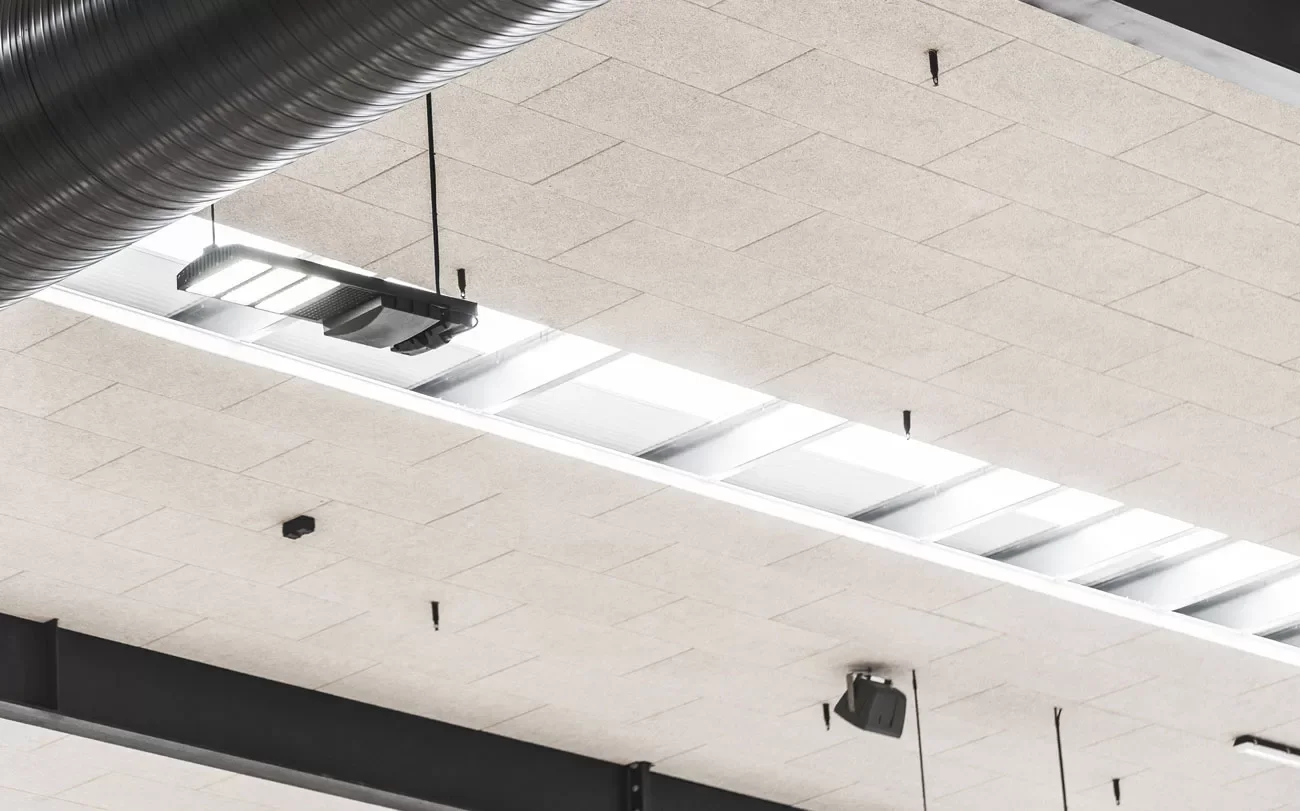
The first is Key Apollo Wood Wool, a magnesite-bonded wood wool panel that brings real warmth and texture to a space while doing genuine acoustic work. Architects and builders like that it pairs a natural, tactile surface with strong sound absorption (up to NRC 0.90) and Group 1 fire performance, which makes it suitable for everything from classrooms and offices to gyms, hospitality and civic spaces. It comes in natural, white and black, installs several ways including lay-in grid and direct fix, and ticks the sustainability boxes as a low-VOC, natural material. For projects chasing that biophilic, calm but considered feel, it has quickly become a favourite.
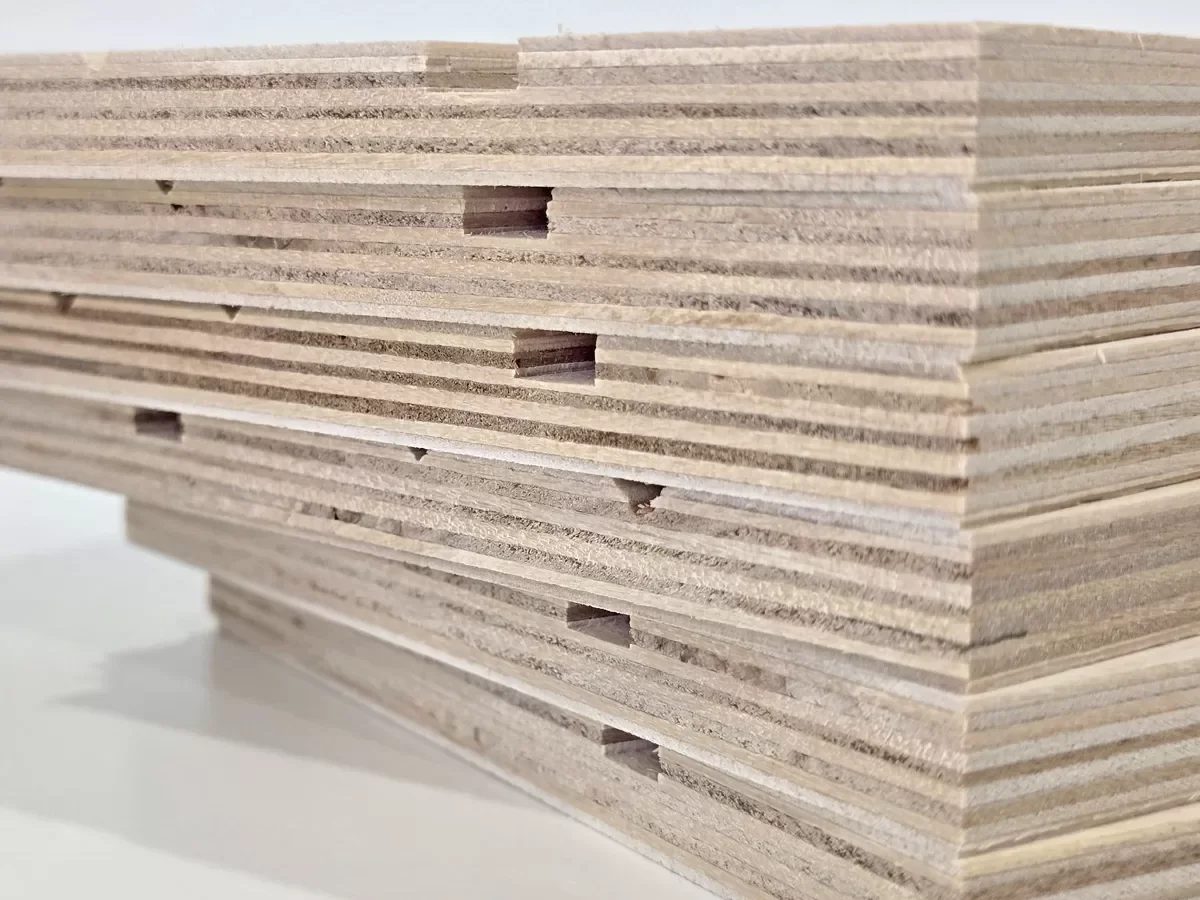
The second is our Birch Key-Ply with Clear Glue Line, a more refined take on birch plywood. It replaces the usual darker adhesive line with a lighter, clear white glue line, so wherever an edge is revealed through perforation, engraving, V-grooves or joinery, the banding between veneer layers almost disappears. The result is a cleaner, more seamless look that sits beautifully under clear finishes. For architects who care about material honesty and precision detailing, that level of finish control is becoming highly sought after.
Both point to the same shift we are seeing: clients want interiors that feel natural and crafted, perform acoustically, and still hold up to close inspection. We love products like these because they give designers more room to be ambitious while keeping the practical side covered.

Are there any projects that you feel best represent the capabilities and values of Keystone Linings?


A handful of projects capture what Keystone does best, bringing design intent, acoustic performance and local manufacturing together across very different settings:

Ansarada Office

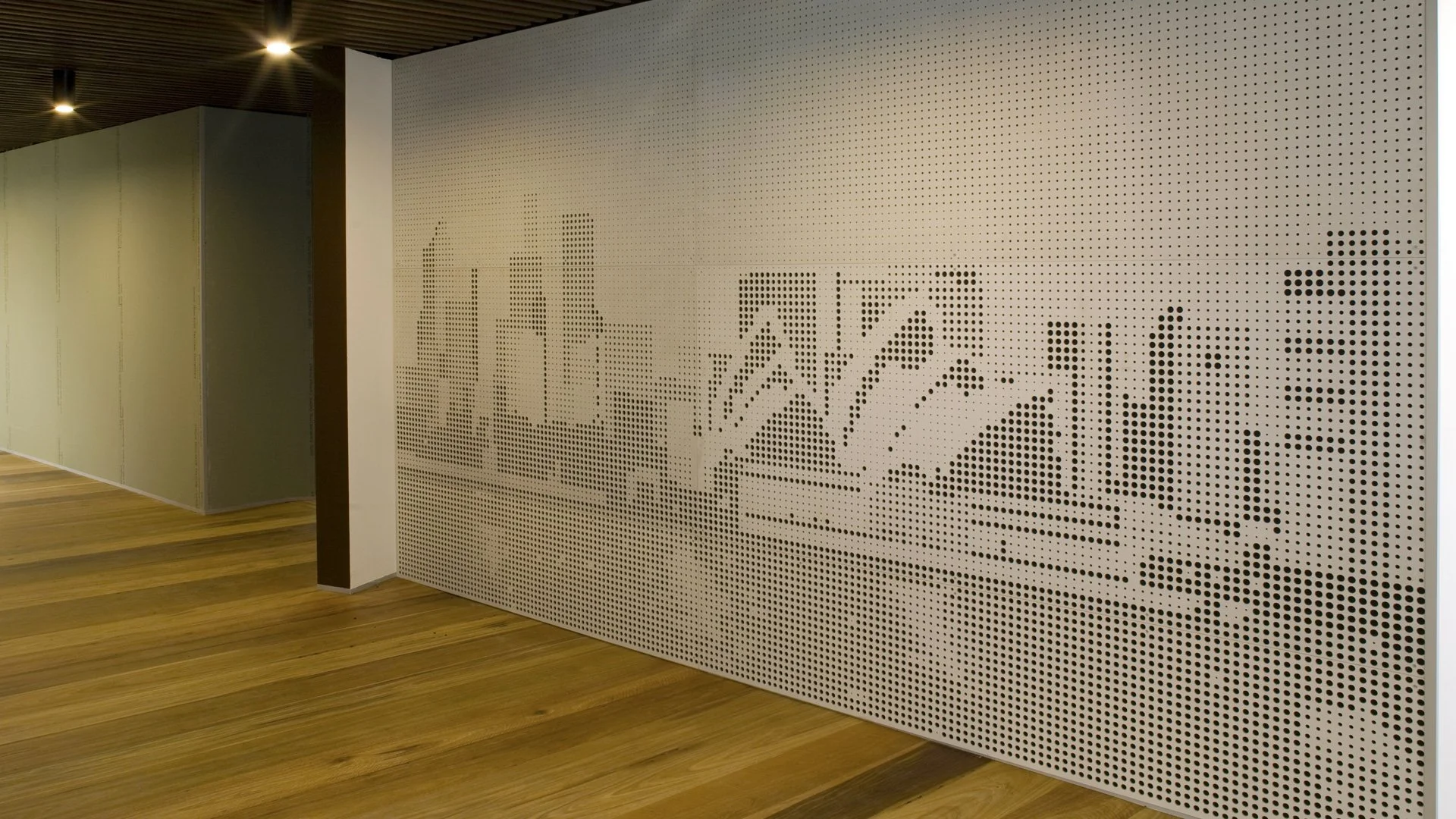
This award-winning workplace fit-out, delivered with Those Architects and End of Work, features our perforated Key-Ply acoustic plywood and pegboard panels to help manage sound across the space. It is a clear example of how a timber lining can shape both the look and the acoustic comfort of a modern commercial interior.

Ansarada Office, Sydney

This award-winning Sydney workplace, designed by Those Architects with End of Work and built by Valmont, is one of our favourite fit-outs. We supplied perforated Key-Ply acoustic plywood and acoustic pegboard panels that do far more than dampen sound: they conceal office storage and create relaxed, hands-on spaces for brainstorming inside one of the country's leading tech companies. The project went on to win four honours in 2014, including the Australian Interior Design Awards (Workplace Design) and the NSW Architecture Awards (Interior Architecture). It shows how a timber lining can shape the personality of a space as much as its acoustics.

Green Square Public School and Community Spaces

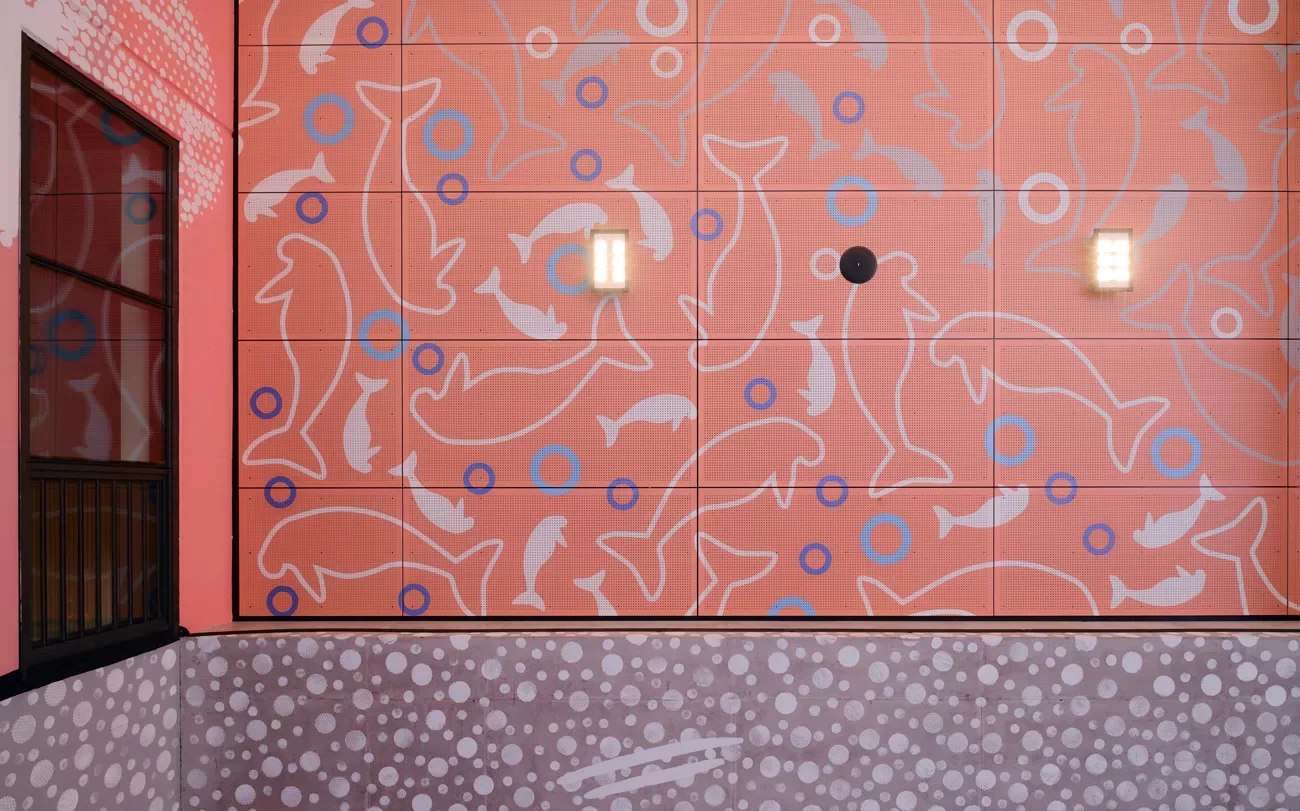
This is a project we're especially proud of. As part of the City of Sydney's Green Square Public School and Community Spaces, we worked alongside BVN Architects, Hutchinson Builders and Goal Interiors to deliver a ceiling that carries genuine cultural meaning, not just acoustic performance. At its heart is a dugong-inspired artwork by celebrated First Nations artist Blak Douglas, developed with iAM Projects and curator Caroline Comino for the City of Sydney. We translated that artwork onto perforated Key-Endura fibre cement panels using our Key-Ink digital printing, reproducing the design at high resolution right across the ceiling, while the perforations and acoustic backing kept the spaces calm and comfortable for learning. Bringing it together took close collaboration between our expert Shuria Agrawaal, the artist and the wider design team, aligning the artistic intent with the technical detailing and installation sequence from the very start. The finished ceiling does two things at once: it tells a story of Country, and it performs as a true acoustic system. For us, that is exactly what a lining can be when design, craft and culture meet. 

Monash Biomedical Learning and Teaching Building

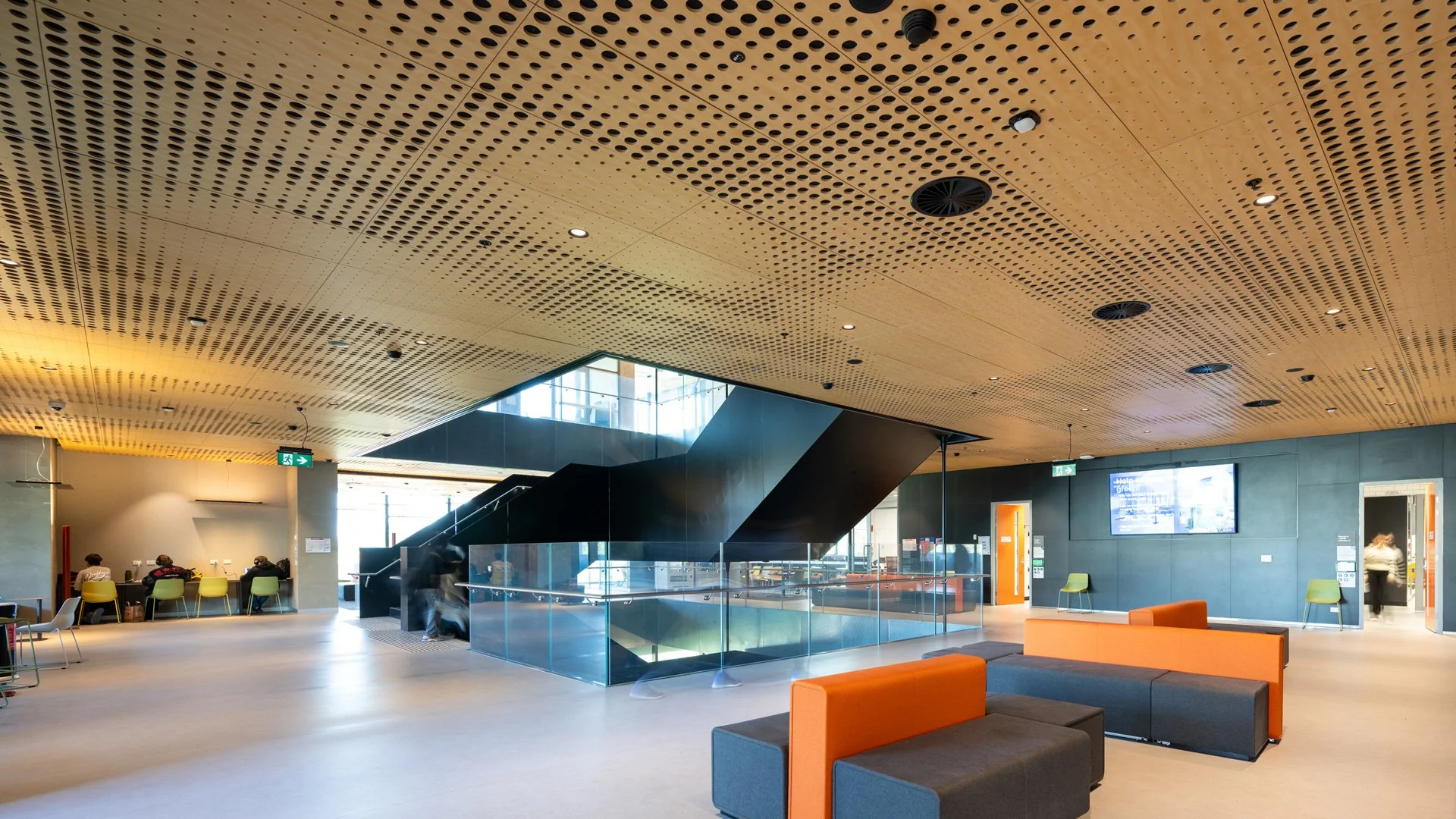
At Monash University's Clayton campus, we delivered custom Key-Nirvana decorative panels in a hoop pine finish, working with architects Denton Corker Marshall and builder Multiplex. The brief we loved most was a tough one: machine panels with custom perforation patterns that echo the building's striking biological frit façade, so that exterior motif carries through to the interiors across all five levels. The result is a set of visually arresting spaces where a single design idea reads from the outside in. It went on to win the 2019 Australian Institute of Architects (Victorian Chapter) Award for Educational Architecture.

1 Martin Place, Sydney

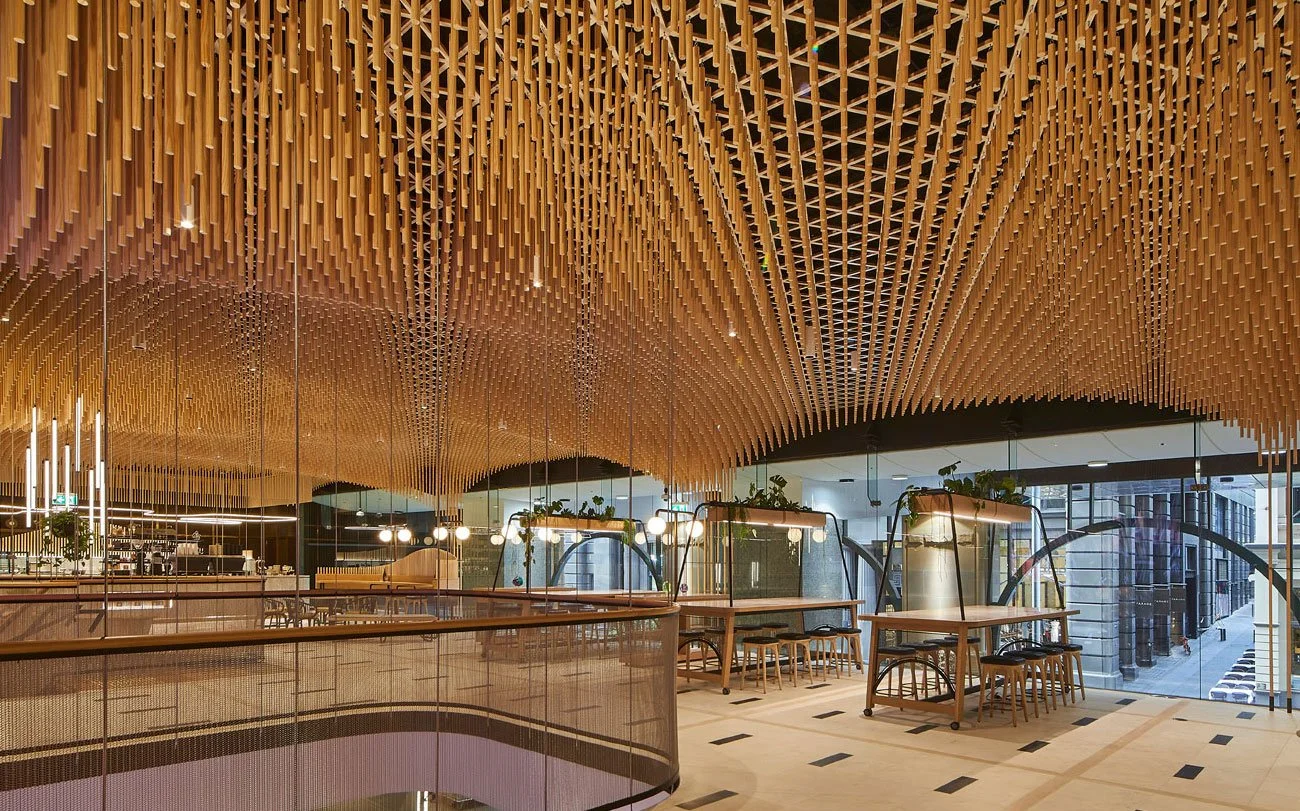
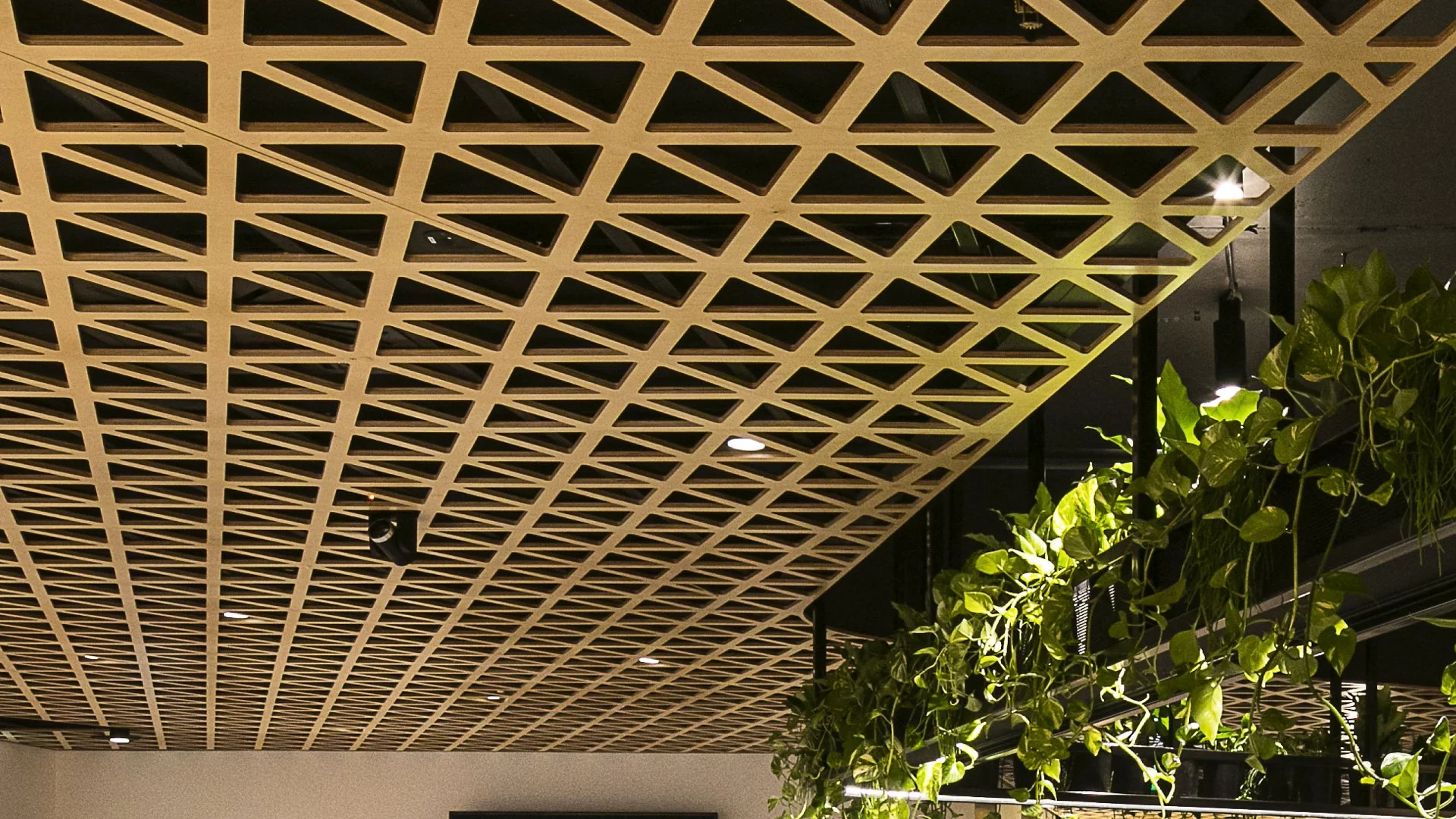
Inside the landmark former GPO at 1 Martin Place, we created one of our most intricate ceilings to date. Our Key-Designa custom-routed acoustic plywood panels carry thousands of vertically suspended timber dowels in varying lengths, more than 9km of them in total, forming a flowing, sculptural canopy overhead. We worked from concept through to installation with Adriano Pupilli Architects, Siren Design Group and builder Graphite Projects to bring the vision to life in this revitalised heritage space. It is a real showcase of what is possible when craft, engineering and design come together.

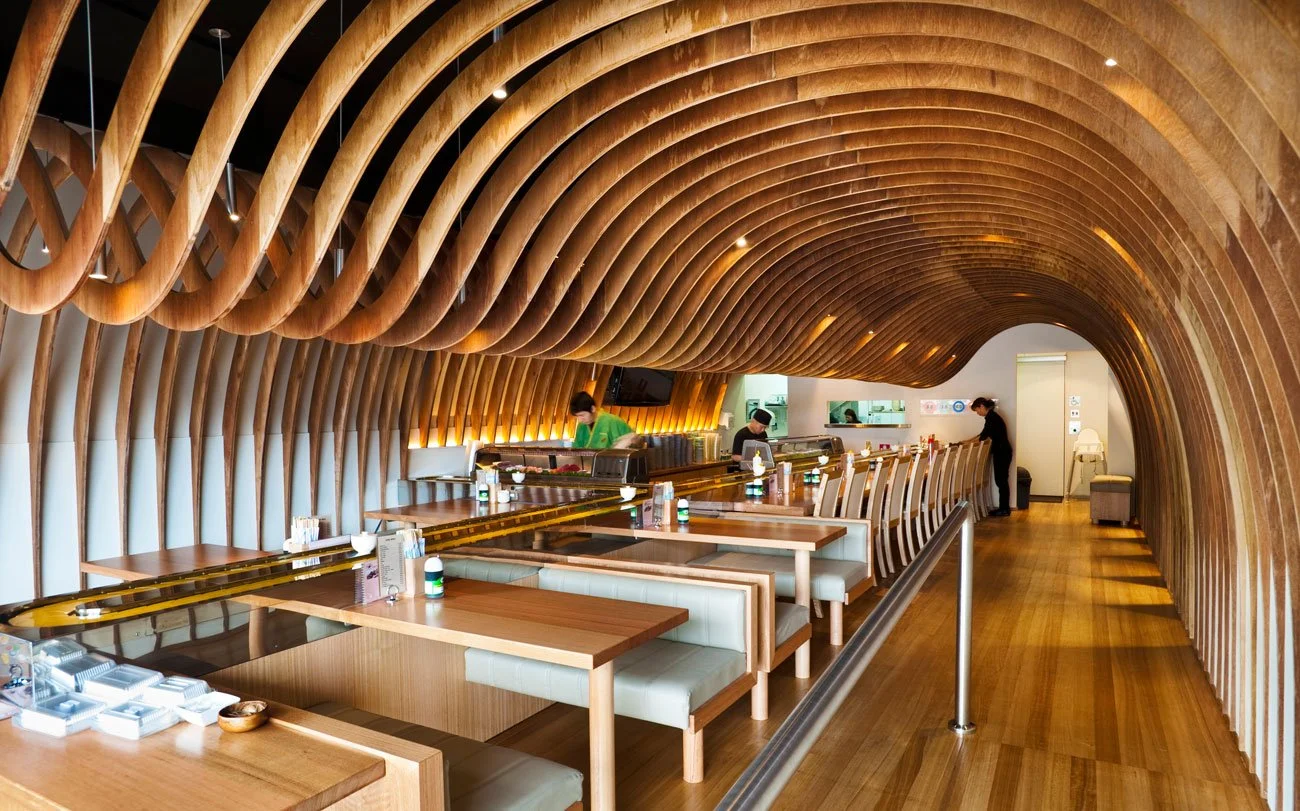
Chrismont Winery

At the Chrismont cellar door and winery restaurant in Victoria's King Valley, our solid and slotted Key-Ply acoustic plywood panels take centre stage across the walls and ceilings. Designed by MG Design & Building and built by Bright Alpine Builders, the space pairs warm timber with genuine acoustic control, so the room stays relaxed and comfortable even when it is full. It is a great example of linings that look beautiful while quietly doing the acoustic work, exactly the kind of long lazy lunch setting the client wanted.