
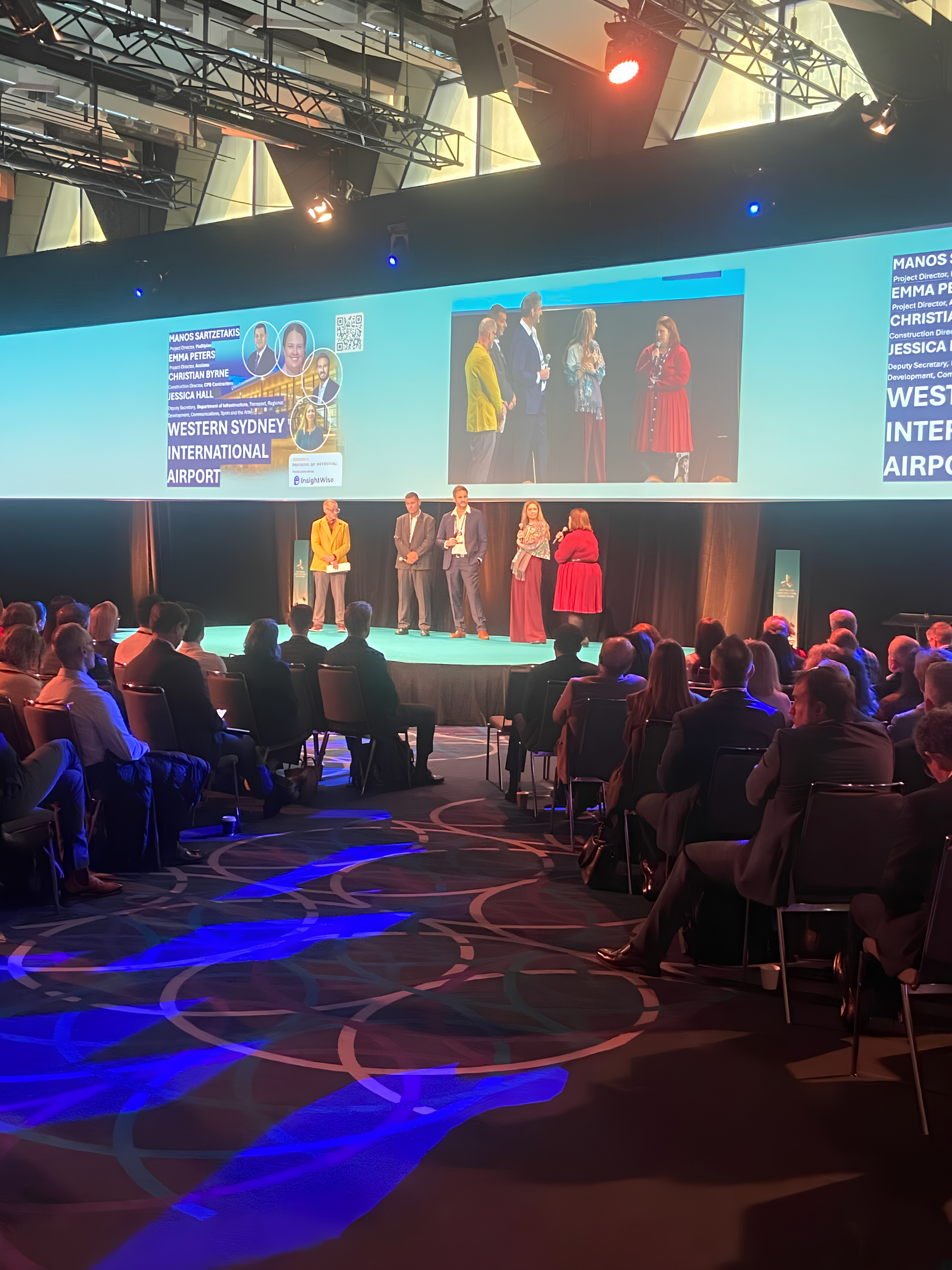
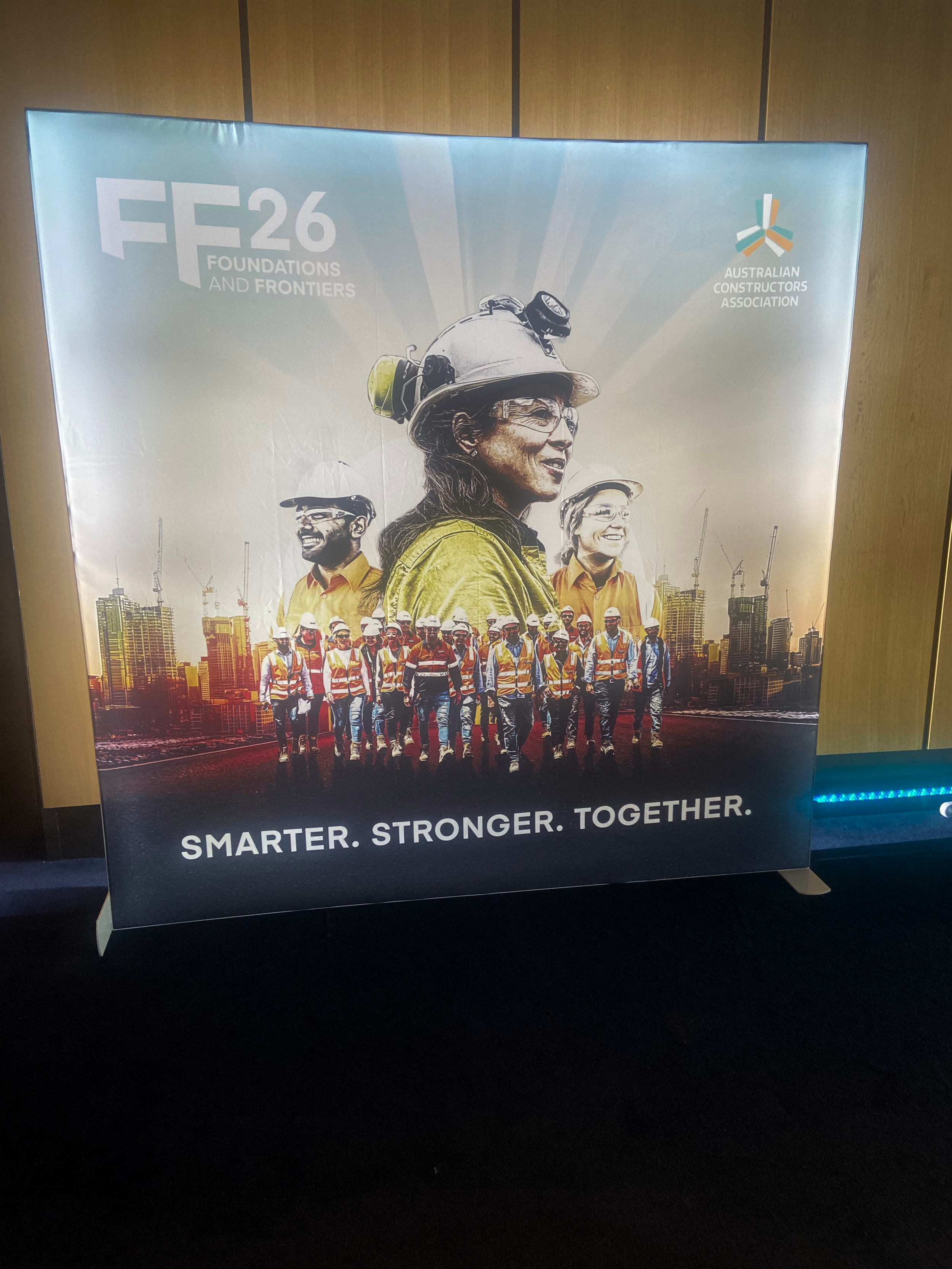
Foundations and Frontiers 2026: Smarter. Stronger. Together.
Built Environment Channel’s Patrick Harrington shares his insights from the Australian Constructors Association’s Foundations and Frontiers forum held in Sydney.
Australia’s construction industry has no shortage of ambition, expertise or ideas. At this year’s Foundations and Frontiers forum, the focus was firmly on how the industry can harness those strengths by working together to build smarter, deliver better and create lasting change.
Under the theme “Smarter. Stronger. Together.”, the Australian Constructors Association event brought leaders from across construction, government and the broader built environment together around an optimistic proposition. Instead of continually asking what needs fixing, look at what is already working and find ways to make it standard practice.
It set the tone for a day focused less on barriers and more on possibilities.
Building on what works
Across the industry, there are projects grounded in a collective culture that demonstrate the benefits of genuine collaboration. Clients, contractors, consultants, specialist contractors and suppliers are finding better ways to work together, creating environments where knowledge is shared earlier, challenges are addressed collectively, and teams are aligned around the same outcome.
Foundations and Frontiers asked an important question: how can we take the behaviours behind our best-performing projects and make them commonplace?
Strong client leadership, early contractor involvement, collaborative procurement, aligned incentives, transparency and trust, and culture were among the ingredients highlighted throughout the discussions.
Rather than collaboration being something that happens despite project structures, there is an opportunity to actively design those structures to encourage it.
Productivity is a system challenge
Productivity remains one of construction’s defining challenges, but the discussions at Foundations and Frontiers reinforced that simply asking people to work harder or faster is unlikely to provide the answer.
Procurement, design, regulation, technology and the supply chain are interconnected. Improvements in one area can only go so far if other parts of the system continue to introduce delays, duplication or unnecessary complexity.
A recurring opportunity was earlier supply-chain integration. Bringing suppliers and specialist contractors into projects earlier can improve design and review processes, identify issues sooner and help avoid discovering expensive problems further down the line.
The broader message was clear: better productivity comes from designing a better system around the people doing the work.
Lessons from a sector moving at speed
Few sectors demonstrate the possibilities of new delivery models quite like data centres.
The extraordinary growth of AI and digital infrastructure is creating demand for construction that is increasingly repeatable, industrialised and predictable. A discussion featuring NEXTDC Group Chief Development Officer Simon Cooper, Kapitol Construction’s Andrew Devson and Laing O’Rourke’s Mark Dimmock explored what the broader industry can learn from this rapidly evolving sector.
When strong demand, clear objectives and aligned project teams come together, the industry can adapt quickly. Processes can be refined, knowledge can be carried from one project to the next and innovation can become part of everyday delivery rather than something reserved for exceptional projects. The lesson extends well beyond data centres.
Taking innovation to scale
That same idea carried into the forum’s debate around Modern Methods of Construction (MMC).
Whether the industry continues to use the term may ultimately be less important than the opportunity behind it: taking industrialised, manufactured and off-site approaches and applying them successfully at greater scale.
Construction already has the technologies, expertise and examples needed to demonstrate what is possible. The next frontier is creating the conditions that allow successful ideas to move from individual projects into mainstream practice.
And that is where collaboration becomes particularly powerful.
Stronger together
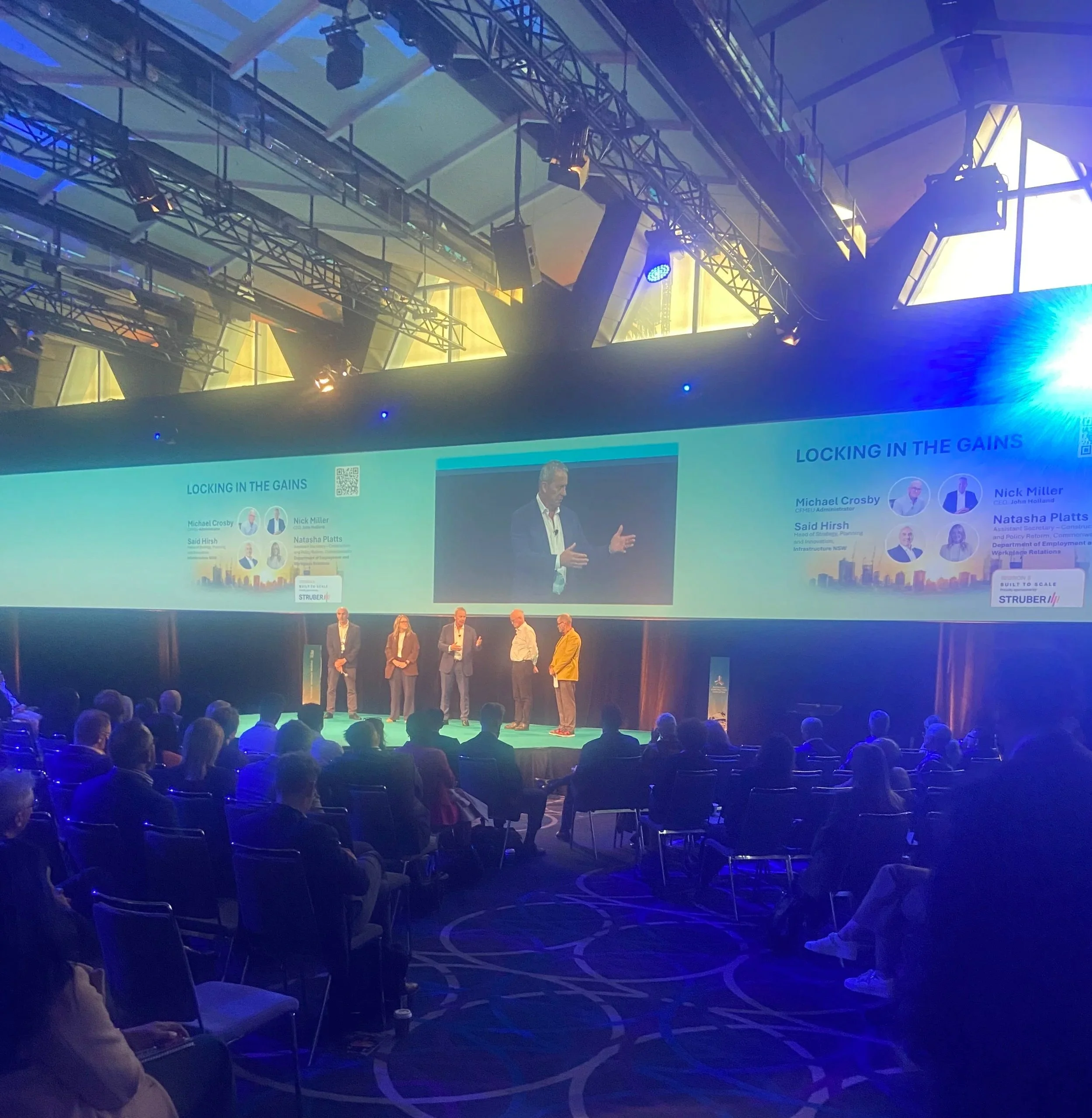
One of the most positive messages to emerge from Foundations and Frontiers was a recognition that everyone has a role to play in the industry's progress.
Government brings one perspective. Clients bring another. Contractors, designers, consultants, suppliers, technology providers and the workforce each bring their own expertise and experience.
Bringing those perspectives together creates the opportunity to find solutions that no single part of the industry could develop alone. The forum repeatedly returned to the value of focusing on shared outcomes and collective progress.
This isn't collaboration for collaboration's sake. It is about unlocking better projects: sharing knowledge, identifying opportunities earlier, improving predictability and creating stronger relationships across the project lifecycle.
An industry ready to move forward
Technology will be part of that future too. AI is increasingly being explored not only as a design or documentation tool, but as a way to bring together information, identify insights and support better industry and project decision-making.
But perhaps the most encouraging message from Foundations and Frontiers was that progress doesn't depend on waiting for the next technology, policy or breakthrough.
Many of the answers are already visible in the industry's best projects.
We know collaboration can deliver better outcomes. We know earlier engagement can unlock expertise. We know construction can become more repeatable and predictable. And we know that when different parts of the industry come together around a common goal, meaningful change is possible.